Wire bonding (micro-wiring), a key step in microelectronics assembly!
Wire bonding remains one of the most widely used technologies today for creating electrical connections between a chip and its package. Whether for sensors, power components, RF devices, or hybrid circuits, the reliability of this interconnection directly determines the performance and lifespan of the final product.
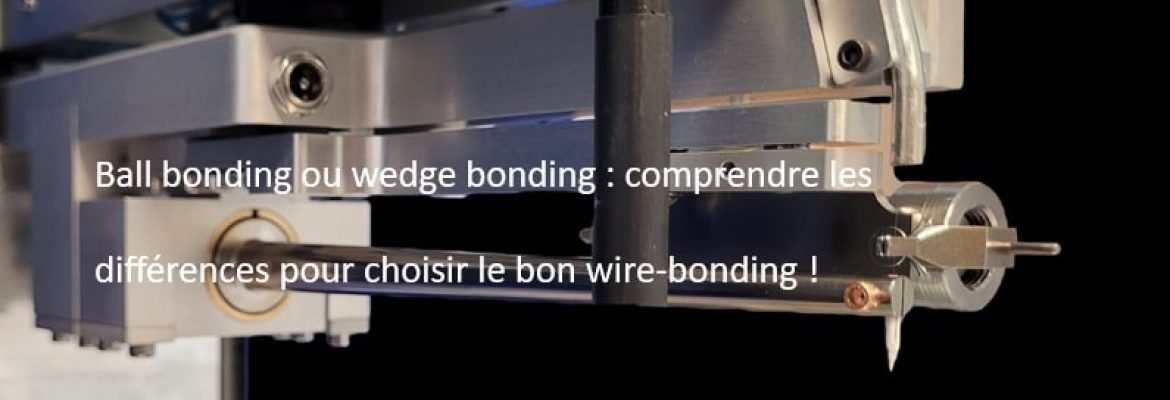
But behind the generic term “wire bonding” lie two major technologies with very distinct principles:ball bonding and wedge bonding.
Understanding the differences between them is essential to making the right choice, whether in R&D, production, or the laboratory.
Ball bonding: the industry standard for gold wires
Ball bonding has historically been the most widely used technology in the semiconductor industry, particularly for the assembly of standard integrated circuits.
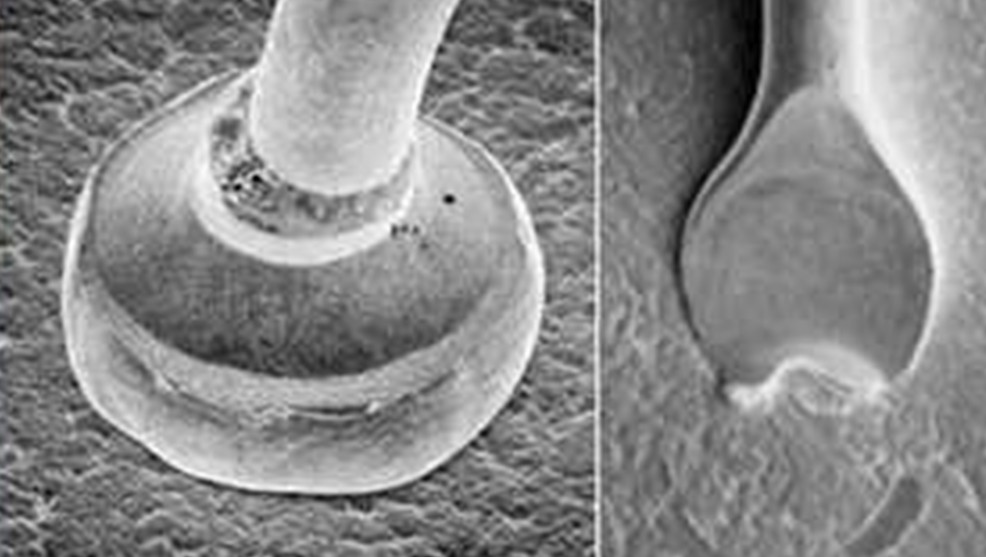
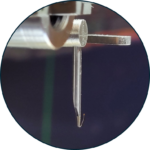
Principle of Operation The process involves forming a ball at the end of a wire, typically made of gold. This ball is created by an electrical discharge and then pressed onto the pad using force, ultrasonic energy, and a controlled temperature. The second connection is then made using a stitch bond.
Advantages of Ball Bonding • Very good process repeatability • Excellent compatibility with aluminum pads • High speed, suitable for industrial production rates • Technology fully mastered for Au wires
Limitations • Not well suited for aluminum wires • More difficult to access on complex or closely spaced geometries • Less flexible for certain specific applications or prototypes
Ball bonding is therefore particularly well-suited for high-volume applications with standardized geometries and high productivity requirements.
Wedge bonding: flexibility and precision, whether with gold or aluminum
Wedge bonding is characterized by a different mechanical approach, but above all by its great versatility.
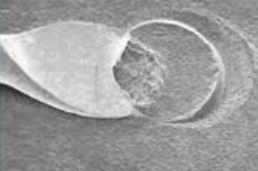
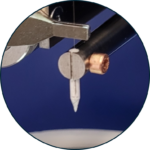
Operating Principle There is no ball here. The wire is pressed directly onto the pad and soldered using a wedge-shaped tool. Both connections are made in a similar manner, with very precise control over the wire’s path.
Advantages of wedge bonding • Excellent control over wire placement • Ideal for closely spaced pads or complex geometries • Widely used for: o sensors o power components o RF devices o R&D and small-volume production • Ability to operate at lower temperatures (particularly with aluminum)
Limitations • Slower than ball bonding • Process more dependent on operator skill in manual or semi-automatic modes.
Wedge bonding is often the preferred method when flexibility, precision, and adaptability take precedence over sheer speed.
Ball bonding or wedge bonding: How do you choose?
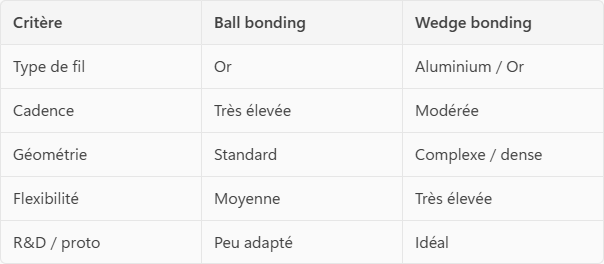
The choice rarely depends on a single criterion. It is based on a balance between material, application, and process constraints:
In many laboratories and pilot lines, wedge bonding has emerged as the most versatile solution, particularly when it is necessary to switch quickly from one type of component to another.
Semi-automatic wire bonding: the right balance
Between fully manual machines and fully automatic production equipment, semi-automatic wire bonders occupy a strategic position.
They offer:
high repeatability
a quick start
great flexibility for R&D, process testing, and small-batch production.
WB200: Precision, Visibility, and Control in Bonding
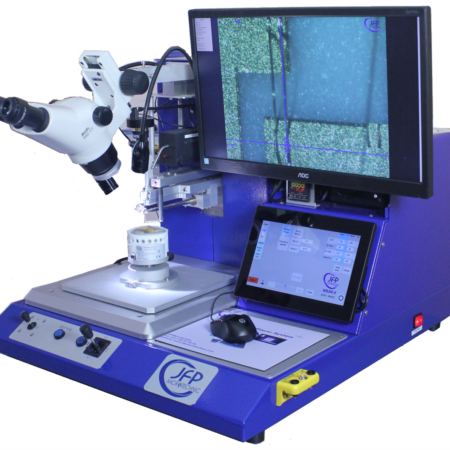
The WB200 was designed to meet the demands of modern wire bonding, whether using aluminum or gold wire, in ball or wedge configurations.
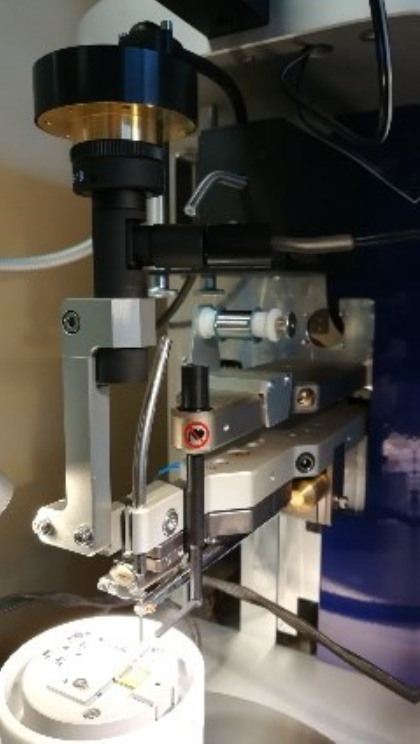
Key features: • Vertical camera providing direct and precise visibility of the bonding point • Stable and repeatable positioning • Ergonomic design for operator comfort • Perfectly suited for the following environments: o R&D o laboratories o pilot lines o small- to medium-volume production
The vertical camera offers a decisive advantage : it allows for precise control of the landing, even on very small or closely spaced pads, and ensures the quality of every connection regardless of the user.
Mastering wire bonding ensures the reliability of the component
Wire bonding is never just a simple assembly step.
It is a critical interface between the chip and its environment, where every parameter (material, geometry, energy, visibility) matters.
Understanding the differences between ball bonding and wedge bonding, and having access to suitable, scalable equipment such as the JFP WB200, enhances reliability, flexibility, and efficiency—from the earliest stages of development through to mass production.
Microtest supports its customers in selecting, integrating, and implementing wire bonding solutions tailored to their applications, transforming a technological constraint into a genuine process advantage.