Thermal testing to address the challenges of optical transceivers integrated into AI infrastructures.
Artificial intelligence is now driving a major technological shift in the design of digital infrastructures. The simultaneous growth in bandwidth requirements, computing density, and energy consumption is creating new physical limitations, particularly in terms of thermal management.
In this context, optical transceivers play a strategic role: their ability to operate reliably under high thermal constraints directly determines the scalability of hyperscale AI infrastructures.
1. Optical transceivers and new constraints in AI architectures
Next-generation AI architectures rely on massively parallel computing accelerators capable of processing unprecedented volumes of data. These systems require ultra-high-speed optical interconnects, often integrated as close as possible to heat-generating components such as processors and accelerators.
This proximity between intensive computing and optical communication fundamentally alters the operating conditions of optical transceivers. They are exposed to greater thermal gradients, rapid temperature fluctuations, and continuous thermal loads, making their thermal behavior just as critical as their optical or electrical performance.
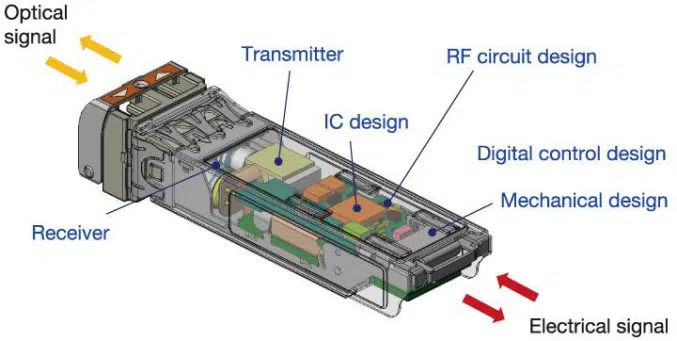
Diagram of an optical transceiver (transmitter-receiver) | Source: FiberMall
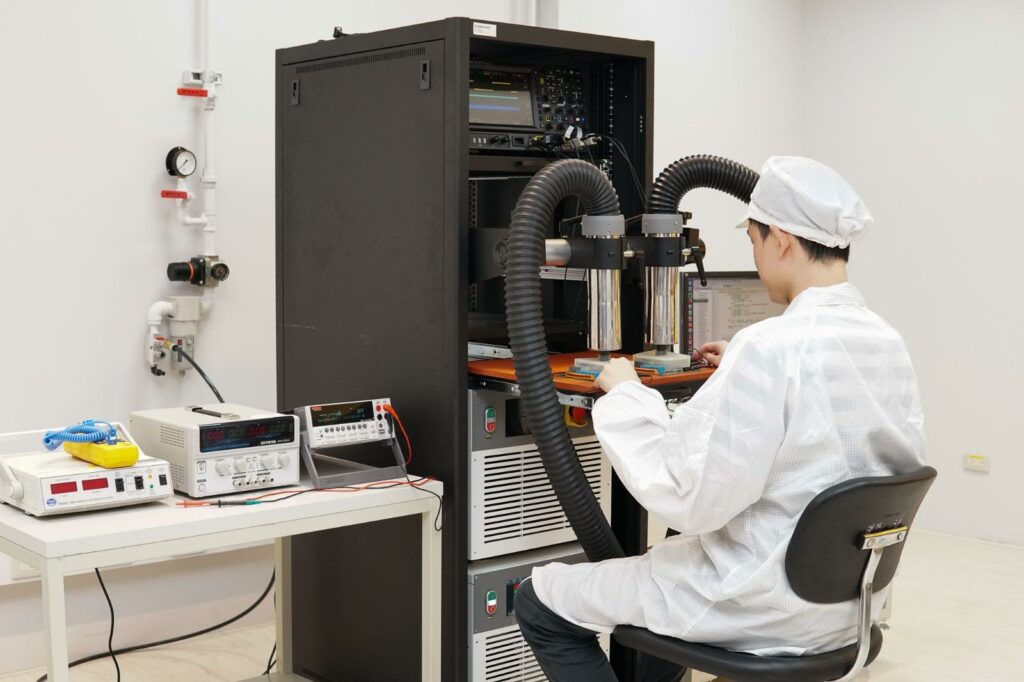
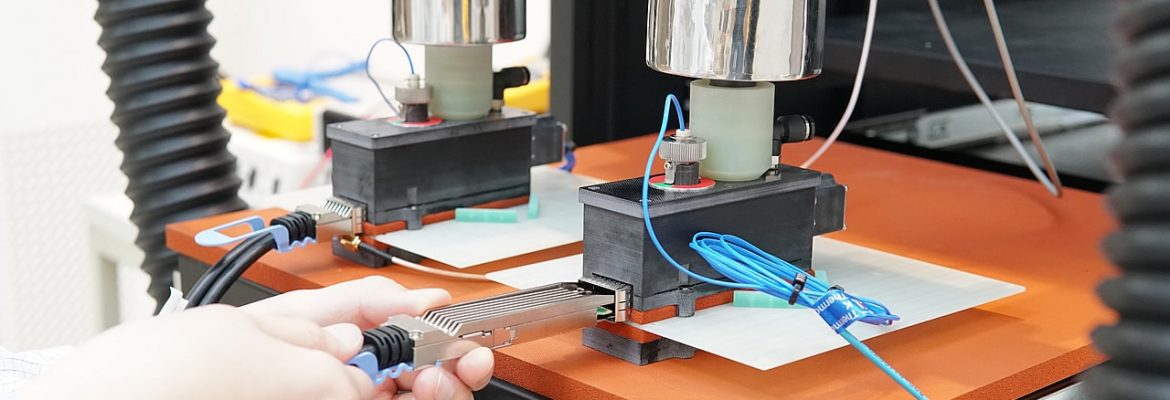
Optical transceiver thermal test bench, configured in pairs, with two MPI Thermal TA-1000 temperature conditioning systems
2. Bandwidth, hyperscale, and increasing thermal constraints
The continuous increase in network bandwidth has become a prerequisite for fully leveraging the capabilities of AI systems. As optical data rates rise (400G, 800G, and beyond), the associated thermal dissipation of optical modules also increases.
In hyperscale environments, this increase in data rates is accompanied by extreme equipment densification. Optical transceivers must therefore maintain stable performance under significantly more demanding thermal conditions than those found in traditional data centers. The challenge is no longer just to transmit faster, but to do so without compromising thermal stability and long-term reliability.
3. Evolving energy demands and the limits of conventional thermal approaches
AI workloads are fundamentally reshaping the distribution of energy consumption within infrastructures. Unlike traditional computing workloads, they generate localized thermal spikes driven by the dynamic activity of computing accelerators and intensive data exchanges.
Traditional global thermal testing approaches, based on large environmental chambers, are reaching their limits when faced with these new thermal profiles. They struggle to accurately replicate localized conditions, rapid transients, and targeted thermal variations experienced by optical transceivers in real-world operation.
4. Central role of thermal tuning in optical stability
The performance of optical transceivers is closely tied to their operating temperature. Lasers, in particular, are highly sensitive to thermal variations, which can lead to wavelength drift, changes in optical power, or degradation in signal quality.
Thermal tuning enables precise adjustment of critical parameters to ensure reliable transmission across the entire operating range. In advanced AI infrastructures, this tuning must account not only for average temperature, but also for rapid fluctuations and extreme conditions encountered during ramp-up phases or continuous full-power operation.
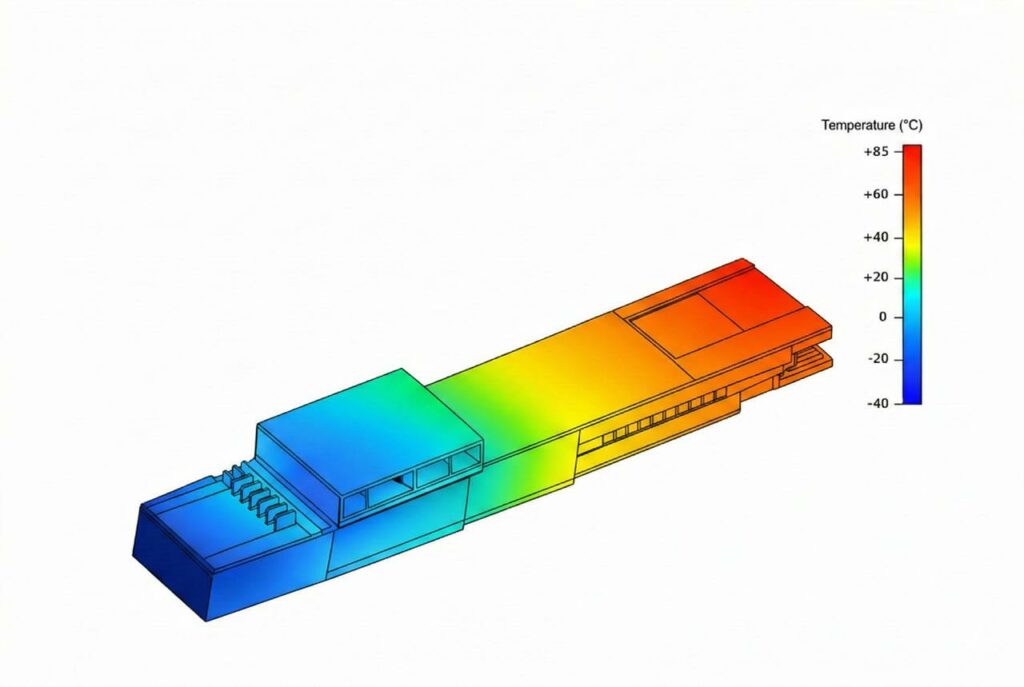
Example of a thermal simulation result for an optical transceiver
Example of a custom shroud for optical transceiver testing using an MPI Thermal temperature conditioning system (TA-1000, TA-3000A, or TA-5000A)
5. Localized thermal testing as a lever for hyperscale scalability
Laser power and wavelength vary with temperature, the behavior of the driver and modulator drifts, receiver gain and decision thresholds change, and DSP operating points that seemed “safe” at room temperature can shrink under cold or hot conditions.
This is why engineers refer tothermal tuning. as a distinct activity that is essential to production. In the manufacturing and validation of optical transceivers, thermal tuning involves adjusting and calibrating the module’s control parameters at different temperatures to ensure performance meets specifications across the entire operating range.
Faced with the physical limits imposed by the density and power of AI systems, thermal testing strategies are evolving toward more targeted approaches. Localized thermal forcing, applied directly to the component, enables realistic replication of actual thermal stresses without the inertia of global testing systems.
This approach provides better correlation between test conditions and real-world usage, particularly for optical transceivers integrated into highly constrained environments. It also helps accelerate validation cycles and reduce gaps between design, production, and operation.
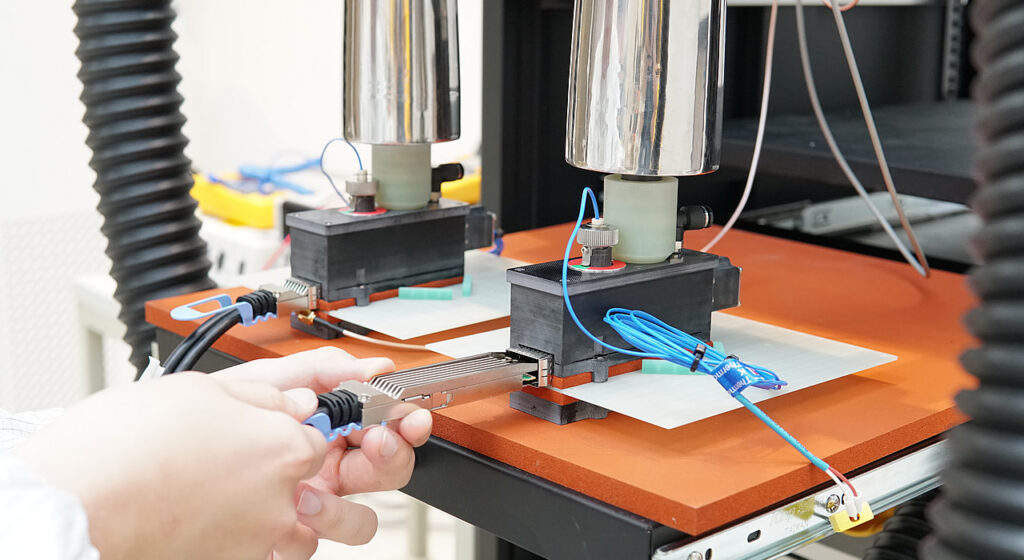
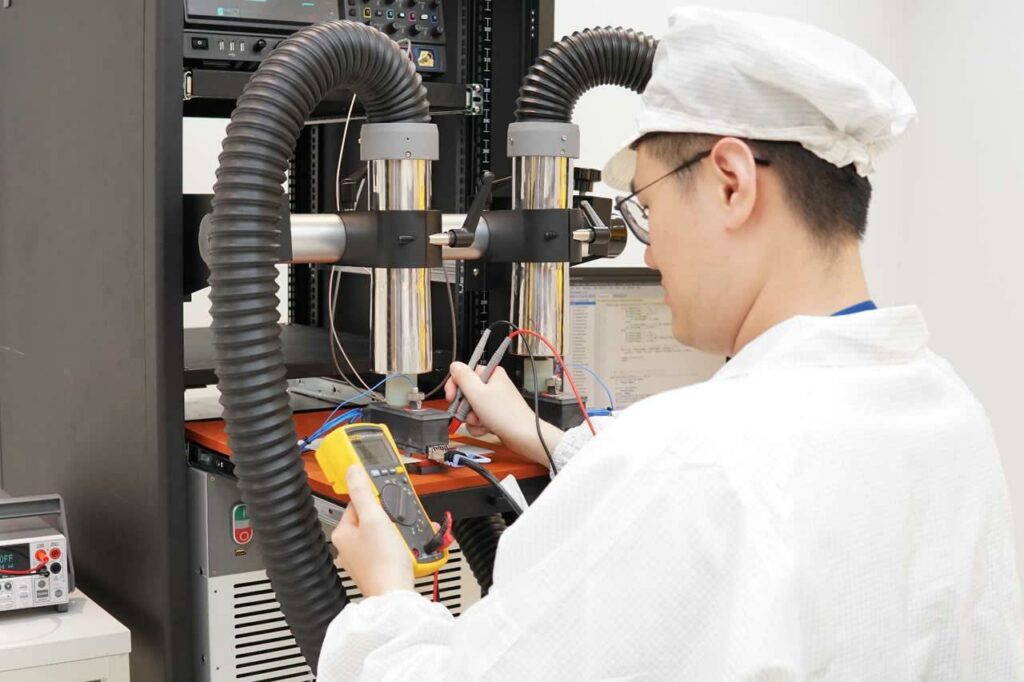
Measurements in progress using a TA-1000 temperature conditioning system and a custom shroud for the optical transceiver
6. Dynamic temperature testing at hot and cold conditions
It is often mistakenly assumed that thermal tuning is primarily a “hot” issue, as power density increases rapidly. In reality, cold conditions are just as important and can even reveal different types of instabilities.
AI workloads generate non-linear thermal profiles characterized by rapid temperature rises and drops. Optical transceivers must be able to withstand these thermal transients without performance degradation or increased error rates.
Dynamic temperature testing, both at hot and cold conditions, therefore becomes essential to identify critical behaviors and validate the robustness of optical modules. It enables the simulation of realistic scenarios such as cold starts, peak loads, or repeated cycles of intense activity—typical of hyperscale AI infrastructures.
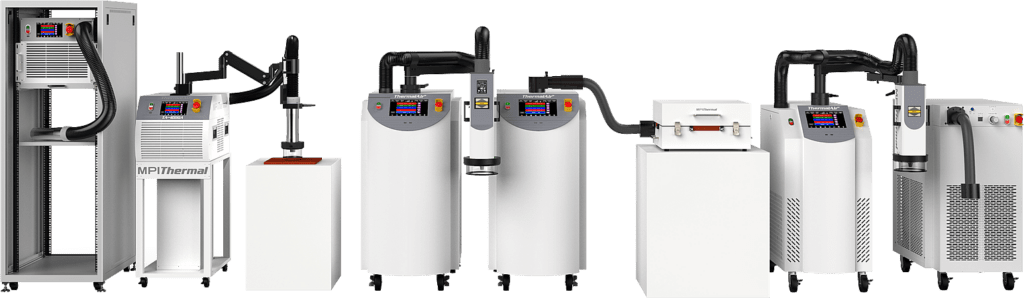
MPI Thermal temperature conditioning systems range
7. Benefits of localized airflow thermal testing systems
Thermal testing systems based on localized hot or cold airflow directly meet the requirements of modern AI environments. By applying temperature precisely where it is needed, they offer high responsiveness, excellent repeatability, and easy integration into test benches or production lines.
This ability to quickly reproduce realistic thermal conditions is a major advantage for the tuning, validation, and qualification of optical transceivers. It helps overcome the thermal barriers that currently limit the scalability of hyperscale AI infrastructures, while improving the reliability and energy efficiency of optical systems.
Contact us for your transceiver thermal testing needs
A tailored, efficient, and ergonomic solution awaits you within the MPI Thermal range!