Understanding thermal performance: how to choose a truly reliable industrial furnace?
In demanding industrial environments, the choice of a furnace is no longer limited to reaching a given temperature. Homogeneity, stability, energy consumption, cycle repeatability and component longevity are now essential criteria. For sectors such as materials processing, electronics, laboratories or industrial production, a high-performance furnace becomes a truly strategic tool.
At Microtest, we’ve been working with manufacturers for many years, helping them to select the heating solutions best suited to their needs. This article provides a comprehensive technical overview of the thermal challenges faced by industrial furnaces, and highlights a range renowned for its reliability: Elite furnaces, designed in the UK.
🔍 Why is choosing an industrial oven a strategic decision?
An undersized or technically insufficient oven can lead to:
production defects,
variations in quality,
excessive energy consumption,
downtime and high maintenance costs.
Thermal consistency is often at the core of the process: even a deviation of just a few degrees can alter a material’s structure, compromise coating adhesion, or disrupt test results.
A reliable, precise, and stable oven therefore becomes a strategic investment… and an essential partner in maintaining quality control.
🧪 Major technical challenges of industrial ovens
✔️ Thermal uniformity
Ensuring that a given volume remains at a uniform temperature is one of the most complex challenges. Convection, radiation, and conduction must be carefully controlled to prevent cold spots.
✔️ Accuracy and stability
Accuracy alone is not enough!
It is also essential to ensure that temperature remains stable over time, regardless of load variations or door openings.
✔️ Materials and insulation
The quality of insulating bricks, fibers, or refractory panels determines:
thermal losses,
energy consumption,
heating ramp-up speed.
✔️ Durability
An oven undergoes repeated, sometimes intense operating cycles: heating elements, relays, controllers, and insulation must be able to withstand long-term use.
🧱 How to choose an industrial oven: key criteria
The technical criteria we systematically recommend analyzing are as follows:
Temperature uniformity (±1 to ±5°C depending on the models)
Quality and type of insulation
Heat-up time
Actual usable volume vs total volume
Control type (PID (Proportional, Integral, Derivative), programmable ramps, integrated data logger, etc.)
Safety features (high-limit cut-off, door interlock, thermal protection)
Compliance with European standards and directives
Maintenance accessibility
A good oven is not defined solely by its maximum temperature: it’s how it reaches it—and how it maintains it—that truly makes the difference.
⭐ Focus: the Elite oven range
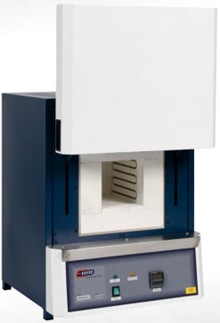
Among international manufacturers, the Elite range stands out for its rigorous engineering approach and its excellent performance-to-reliability ratio.
Here are some particularly appreciated technical features:
Outstanding thermal uniformity, reaching ±1°C on certain models,
A robust mechanical design, minimizing deformation even at high temperatures,
Modern insulation materials, reducing heat loss and energy consumption,
High-precision PID controllers (Proportional, Integral, Derivative) and programmable controls,
Rigorous British manufacturing, with a high level of finish,
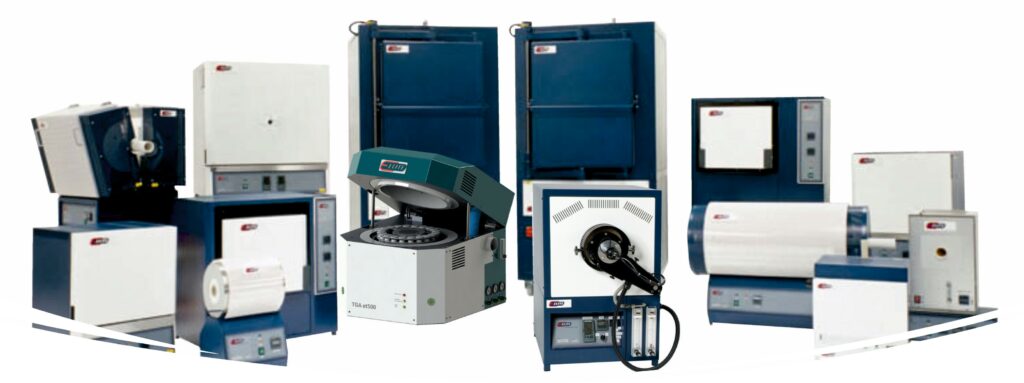
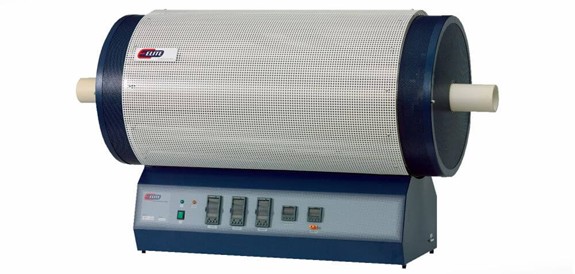
A wide range: laboratory ovens, industrial furnaces, and custom-built models.
The Elite range perfectly illustrates what a modern, reliable, and durable oven can deliver.
Microtest: your local partner
Microtest supports you at every stage: sizing expertise, on-site installation and commissioning, user training, fast and efficient after-sales service in France, and personalized support tailored to your operational constraints.
The end user therefore benefits from the best of both worlds: an internationally recognized quality oven, backed by responsive local service.
The choice of an industrial oven must be based on a rigorous technical analysis. Microtest supports each client in this process, notably with the Elite range for the most demanding applications.